The Ultimate Pool Enclosure Selection & Materials Guide: From Traditional Screens to Modern Retractable Enclosures
Investing in a pool enclosure is the most effective way to secure year-round revenue from outdoor assets. However, specifying the wrong materials can lead to premature structural failure, high maintenance overhead, and a cheapened brand aesthetic. This guide provides an engineering and design breakdown of the best frame materials for pool enclosures in humid climates, evaluates the different types of pool screen materials, and compares traditional setups with cutting-edge retractable glass systems.
addasunroom
6/7/20264 min read
1. Core Frame Materials: Engineering for High-Humid Pool Environments
A swimming pool environment is an aggressive environment for structural engineering. The combination of 100% relative humidity, evaporated pool sanitizers (chlorine or saltwater line systems), and intense ambient UV exposure will rapidly compromise inferior materials.
When evaluating structural framing, developers typically consider three options:
Wood Framing: While visually rustic, wood absorbs moisture, warps over time, and requires continuous sealing to prevent rot and mold. In a commercial setting, the long-term maintenance shutdown costs make wood non-viable.
Light-Gauge Steel: Steel offers high structural strength but is highly susceptible to rust and chemical corrosion when exposed to chlorinated pool vapors. Once the protective coating scratches, structural integrity degrades rapidly.
Architectural-Grade Aluminum (The Industry Standard): For premium commercial projects, high-tensile extruded aluminum alloys (specifically 6061-T6 or 6063-T6 Aluminum) are the gold standard. Aluminum naturally forms a protective oxide layer that resists corrosion. When finished with commercial-grade powder coating or PVDF (fluorocarbon) finishes, it becomes virtually impervious to humidity, salt air, and pool chemicals.
2. Glazing & Screen Materials: Traditional Mesh vs. Solid Enclosures
Selecting what spans your framework is just as critical as the frame itself. The market has shifted dramatically from residential-grade bug barriers to commercial-grade thermal envelopes.
Traditional Pool Screen Materials
Historically, standard pool enclosures relied on flexible mesh screens. The most common different types of pool screen materials include:
Standard Fiberglass Mesh: Lightweight and economical, but highly prone to tearing under wind loads or degradation from intense UV rays.
Heavy-Duty Polyester Mesh (Pet Screen): Offers significantly higher puncture resistance than fiberglass, but it remains a porous material.
The Great Shift: Why Commercial Venues Compare Glass vs. Screen Pool Enclosures
While mesh screens keep out leaves and insects, they fail completely at climate control. If your venue is located in a region that experiences freezing winters, heavy downpours, or high winds, a mesh screen cannot trap heat or block the cold.
To help your engineering and finance teams visualize the performance gap, review the comprehensive, responsive material matrix below.
3. Profiles and Aesthetics: Integrating with High-End Architecture
A commercial pool enclosure must not look like an afterthought; it must act as a seamless extension of the property’s primary architecture.
Architectural Profiles: Low-Profile vs. High-Profile
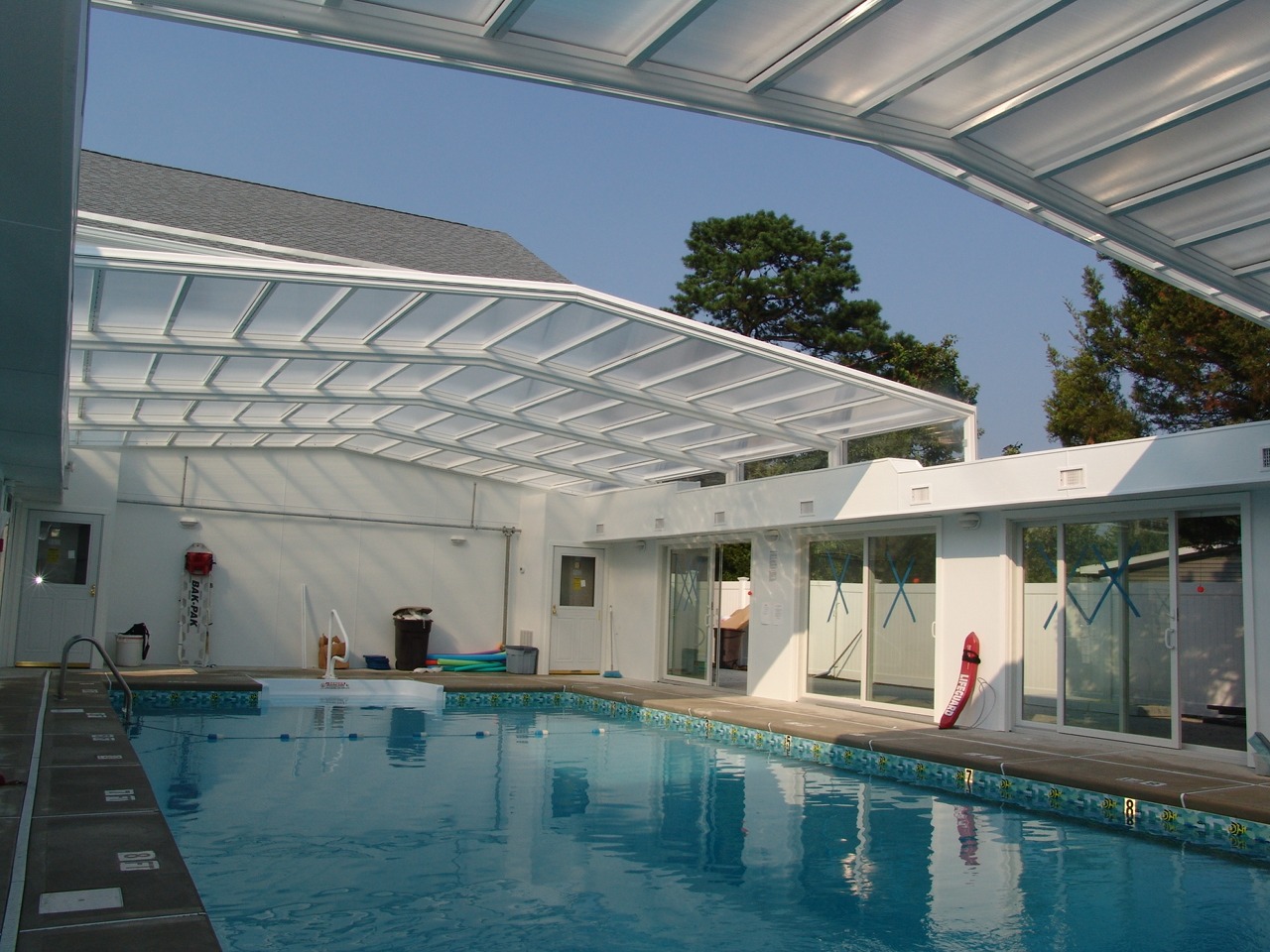
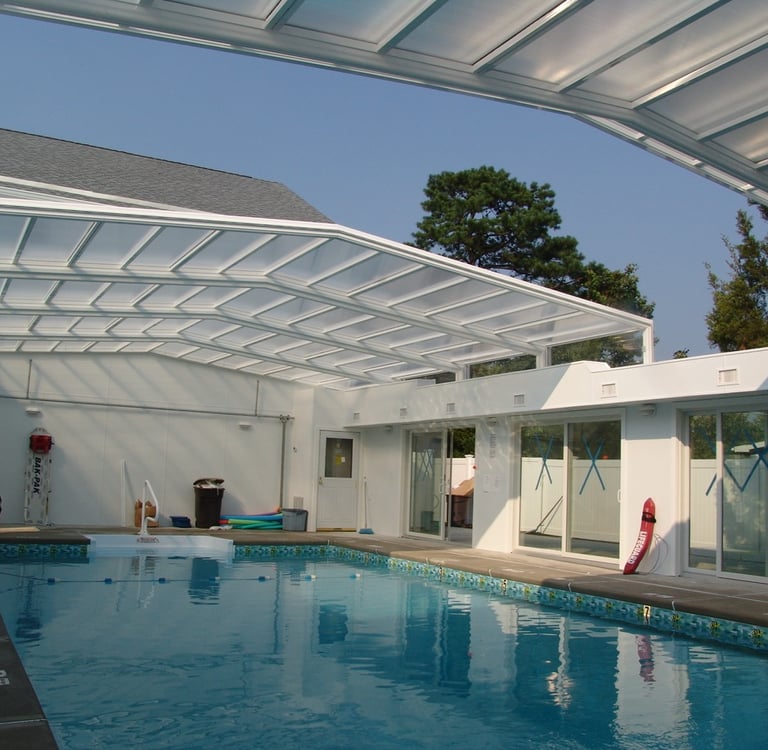
Advantages of Low-Profile Pool Enclosure Designs: For properties where preserving scenic vistas is paramount—such as boutique coastal resorts or mountain-facing luxury hotels—low-profile configurations are highly advantageous. These sleek, minimalist systems retract close to the pool deck elevation, remaining completely unobtrusive when viewed from neighboring structures while successfully shielding the water area when closed.
High-Profile Standing Architectural Spaces: For grand hospitality spaces, rooftop bars, and restaurant dining areas, high-profile lean-to or freestanding structures create an open, majestic conservatory ambiance, maximizing vertical volume for interior landscaping, lighting, and premium seating layouts.
Matching Pool Enclosure Styles to Home & Commercial Architecture
Achieving true visual cohesion requires precise specification of finishes and contours. Modern structural engineering allows for completely custom color-matching to existing window mullions and facade panels. Whether your venue features a minimalist industrial design with matte black framing or an organic resort style requiring custom wood-grain powder coat alternatives, the profile should match the structural identity of the host building.
Looking for visual inspiration?
Discover our curated design database.Explore [Where can I find examples of modern pool enclosure designs?] by browsing the official Addasunroom Project Gallery.
4. Frontline Innovation: Next-Generation Retractable Technology
The most impactful advancement in modern commercial architectural enclosures is the integration of advanced automation.
When analyzing what are the newest innovations in retractable pool enclosure technology, the focus centers on smart, responsive mechanics:
Motorized Smart-Drive Systems: Utilizing low-voltage, high-torque internal synchronized motors, massive structural glass bays slide open or shut silently via secure smartphone applications, wall-mounted control panels, or building management systems (BMS).
Integrated Weather Sensors: Advanced installations feature localized wind, rain, and seismic sensors. If a sudden thunderstorm develops while guests are swimming, the system automatically detects moisture or high wind thresholds and seals the space completely in under two minutes without requiring staff intervention.
Advanced EPDM Seals & Interlocking Rails: Moving joints feature complex multi-tier EPDM weather stripping and deep interlocking track profiles, ensuring that when the retractable system is closed, it achieves a high level of air and water tightness, locking out severe winds and keeping climate control energy bills manageable.
Conclusion: Build with Commercial-Grade Certainty
The materials you select for your commercial pool enclosure directly dictate your venue's long-term operational success. While a basic mesh screen might suffice for a residential backyard, a commercial hospitality asset requires an unyielding, high-performance structural envelope.
By investing in architectural-grade T6 aluminum framing combined with insulated retractable glass or impact-resistant polycarbonate systems, you protect your real estate asset against severe climates, maximize guest comfort, and secure an uninterrupted, year-round revenue stream.
Ready to select the ideal material specifications for your venue?
Contact the structural engineering and B2B design specialists at Addasunroom today. We provide full CAD architectural planning, local loading compliance analyses, and commercial pricing models tailored to your exact development scope.


Project title
This project aims to develop a user-friendly mobile application that enhances productivity and organization. Through intuitive design and seamless functionality, users can efficiently manage tasks, set reminders, and collaborate with team members.


Project title
This project aims to develop a user-friendly mobile application that enhances productivity and organization. Through intuitive design and seamless functionality, users can efficiently manage tasks, set reminders, and collaborate with team members.